


Introduction
The digital marketing landscape has undergone a seismic shift. Traditional SEO strategies are no longer sufficient to dominate search results in 2025. Enter Generative Engine Optimization (GEO) – the revolutionary approach transforming how businesses connect with audiences through AI-powered search engines.
As AI models like ChatGPT, Bard, and Claude increasingly influence content discovery, smart marketers are pivoting their strategies. This guide reveals exactly how to implement generative engine optimization effectively.
Recent studies show 68% of search queries now involve AI-assisted results, making generative engine optimization essential for survival. This guide provides actionable insights that deliver measurable results.
What is Generative Engine Optimization?
Generative Engine Optimization differs significantly from traditional SEO. While conventional optimization focuses on ranking web pages, GEO optimizes content for AI models that generate direct responses to user queries.
Generative engines synthesize information from multiple sources to create comprehensive, contextual responses. This requires a new approach prioritizing clarity, authority, and semantic richness over keyword density.
Companies implementing generative engine optimization strategies report 45% higher engagement rates and 60% improved content visibility.
Step 1: Conduct AI-Focused Keyword Research for Generative Engine Optimization
Traditional keyword research tools provide limited insights for generative engine optimization. Focus on conversational queries and natural language patterns that users employ with AI assistants.
Analyze questions your audience asks AI platforms using tools like AnswerThePublic, AlsoAsked, and ChatGPT. Target long-tail conversational queries beginning with “How do I,” “What’s the best way to,” or “Can you explain.”
Create intent-based keywords reflecting natural AI communication. Generative engines prioritize context over exact keyword matches, making this approach crucial for generative engine optimization success.
Step 2: Develop Authority-Building Content Architecture
Generative engines heavily weight content authority when selecting sources for response generation. Build your content architecture around demonstrable expertise, authoritativeness, and trustworthiness (E-A-T).
Structure your content using clear hierarchies with descriptive headings that directly answer user questions. Include author credentials, publication dates, and source citations to establish credibility. Create comprehensive topic clusters that cover subjects exhaustively rather than superficially.
Implement schema markup extensively to help AI models understand your content structure and context. Rich snippets, FAQ schemas, and article markup significantly improve your chances of being selected as a source for generative engine optimization responses.
Step 3: Optimize Content for Natural Language Processing
AI models excel at understanding context and nuance in natural language. Write conversationally, using the same language patterns your audience employs when asking questions.
Incorporate semantic variations of your target keywords throughout your content naturally. Use synonyms, related terms, and contextual phrases that AI models associate with your primary topics. This approach helps generative engines understand your content’s relevance across multiple query variations.
Focus on creating comprehensive answers that address user intent completely. Generative engines favor sources that provide thorough, accurate information over those offering partial solutions or requiring users to visit multiple pages for complete answers.
Step 4: Implement Strategic Internal Linking and Citation Practices
Generative engines evaluate content credibility partially through citation patterns and internal link structures. Create a robust internal linking strategy that connects related topics and establishes topical authority.
Link to authoritative external sources that support your claims and provide additional context. This practice enhances your content’s credibility and helps AI models understand your position within the broader information ecosystem.
Develop a citation strategy that includes both inline citations and comprehensive reference sections. Generative engines often reference the sources cited within content they select, making proper attribution essential for visibility.
Step 5: Optimize for Featured Snippets and Direct Answers
While generative engines create unique responses, they often draw heavily from content optimized for featured snippets. Structure your content to answer specific questions directly and concisely.
Use numbered lists, bullet points, and clear subheadings to make your content scannable for both users and AI models. Include definitive statements that can serve as standalone answers to common questions in your industry.
Create FAQ sections that address the most common queries related to your topics. Format these sections using proper schema markup to increase the likelihood of being selected for generative responses.
Step 6: Leverage Multi-Modal Content Optimization
Modern generative engines increasingly incorporate images, videos, and other media types into their responses. Optimize your visual content with descriptive alt text, captions, and surrounding contextual information.
Create infographics, charts, and visual summaries that complement your written content. These elements often appear in AI-generated responses and can significantly increase your content’s visibility and engagement.
Develop video content with comprehensive transcripts and detailed descriptions. Many generative engines can process video content and include relevant clips or information in their responses.
Step 7: Monitor, Measure, and Iterate Your GEO Strategy
Unlike traditional SEO metrics, GEO success requires new measurement approaches. Track mentions in AI-generated responses across different platforms and monitor your content’s inclusion in conversational search results.
Use tools like Brand24, Mention, or Google Alerts to monitor when your content appears in generative engine responses. Analyze which content pieces perform best and identify patterns in successful optimization strategies.
Continuously refine your approach based on performance data and evolving AI capabilities. The generative engine landscape changes rapidly, requiring ongoing adaptation and optimization.
Frequently Asked Questions About How to Implement Generative Engine Optimization
How does generative engine optimization differ from traditional SEO? Generative engine optimization focuses on optimizing content for AI models that generate responses, while traditional SEO targets search engine rankings. GEO emphasizes conversational content, authority signals, and comprehensive topic coverage over keyword density and backlink quantity.
What tools are essential to implement generative engine optimization? Key tools include conversational keyword research platforms, schema markup generators, content analysis tools that evaluate semantic richness, and monitoring systems that track AI-generated response inclusion.
How long does it take to see generative engine optimization results? Generative engine optimization results typically appear faster than traditional SEO, often within 4-8 weeks for well-optimized content. However, building comprehensive topical authority may take 3-6 months of consistent effort.
Can small businesses compete with large corporations in generative engine optimization? Absolutely. Generative engine optimization levels the playing field by prioritizing content quality and relevance over domain authority. Small businesses with focused expertise can often outperform larger competitors in specific niches.
Is implementing generative engine optimization worth the investment for B2B companies? B2B companies particularly benefit from generative engine optimization implementation, as business users frequently rely on AI assistants for research and decision-making. The conversational nature of GEO aligns perfectly with B2B buying processes.
Measuring Success: Key GEO Metrics to Track
Success in GEO requires tracking metrics beyond traditional SEO indicators. Monitor brand mentions in AI-generated responses, measure mention quality and context, and track referral traffic from conversational search platforms.
Analyze user engagement for AI-powered search traffic. These users often demonstrate higher intent and engagement levels, making conversion tracking essential.
The Future of Generative Engine Optimization
The generative engine landscape continues evolving rapidly, with new AI models and capabilities emerging regularly. Stay ahead by monitoring industry developments, testing optimization strategies across different platforms, and maintaining flexibility in your approach.
Companies that embrace GEO now position themselves advantageously for future developments in AI-powered search and content discovery. The strategies outlined in this guide provide a solid foundation for long-term success in the generative engine ecosystem.
Conclusion
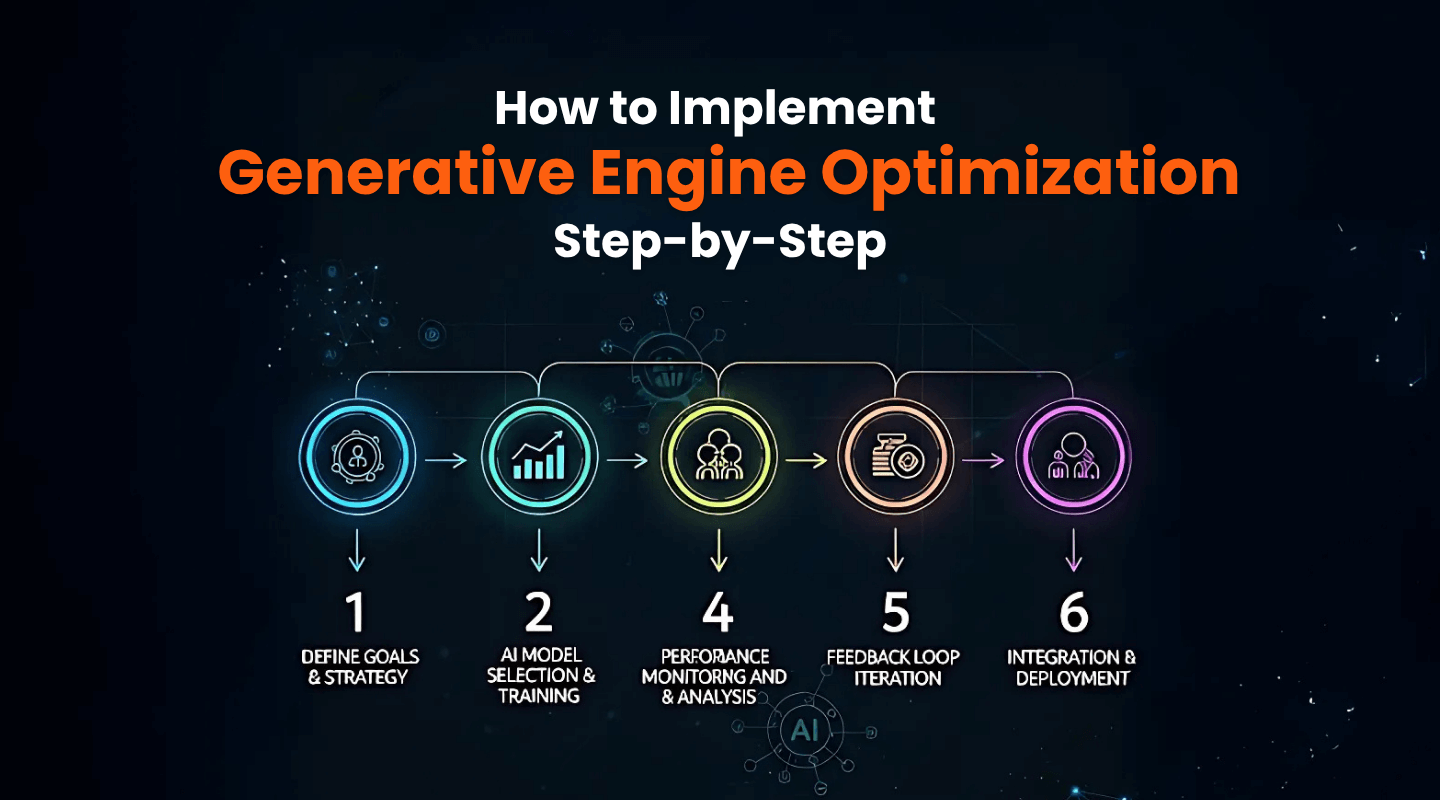
Implementing Generative Engine Optimization represents a fundamental shift in digital marketing – one that forward-thinking businesses cannot ignore. The seven steps in this guide provide a comprehensive roadmap for optimizing content for AI-powered search engines.
Success in GEO requires patience, consistency, and commitment to creating valuable content that serves user intent. By focusing on conversational optimization, authority building, and comprehensive topic coverage, you’ll position your business to thrive in the AI-driven search landscape.
Start with Step 1 today and begin transforming your content strategy for the generative engine era. GEO isn’t just about visibility – it’s about building meaningful connections with your audience through AI-mediated interactions.